

Flax Nutrient Demand Compared to Other Annual Grain Crops
Total Nutrient Uptake (lbs/bu)
| Nutrient | Flax | Canola | Wheat | Pea |
|---|---|---|---|---|
| Nitrogen | 3 | 3.3 | 2.3 | 3.0 |
| P₂O₅ | 0.85 | 1.45 | 0.8 | 0.83 |
| K₂O | 1.8 | 2.3 | 2.0 | 2.75 |
| Sulfur | 0.56 | 0.6 | 0.25 | 0.25 |
Soil factors and agronomic management may limit nutrient demand:
- Soil Texture;
- Soil Electrical Conductivity;
- Soil pH
- Abiotic Stress (e.g. heat, moisture);
- Biotic Stress (e.g. weeds, pests).
What is your field-specific yield potential? What fertilizer application rates will achieve maximum profitability?
Factors influencing soil nutrient supply for flax
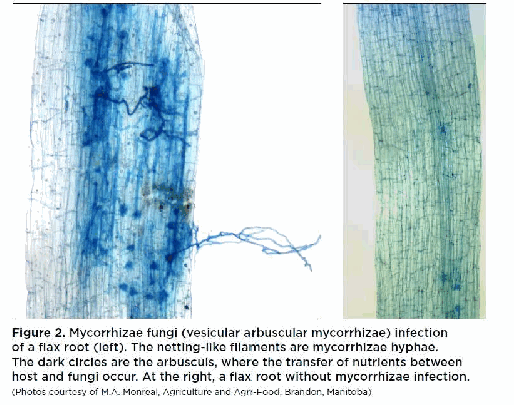
Flax enter into a symbiotic relationship with arbuscular mycorrhizal fungi (AMF) to increase nutrient uptake, particularly of phosphorus.
| Soil Temp (°C) | N Supply Rate (µg 10 cm⁻² week⁻¹) | P Supply Rate (µg 10 cm⁻² week⁻¹) | Respiration (µg CO₂-C kg⁻¹) |
|---|---|---|---|
| 5 | 62 | 2.2 | 37a |
| 20 | 90 | 2.1 | 189b |
| 30 | 300 | 2.4 | 337c |
PRS® Nutrient Supply Rate (µg 10 cm⁻² hour⁻¹)
| Soil Moisture Content (% F.C.) | N | P | K | S |
|---|---|---|---|---|
| 100% | 200 | 2.7 | 181 | 39 |
| 70% | 196 | 1.4 | 155 | 37 |
| 15% | 24 | 0.3 | 48 | 12 |
Soil moisture, temperature, and microbial activity influence soil nutrient supply by impacting nutrient diffusion and mineralization.
Flax emergence response to N and P application
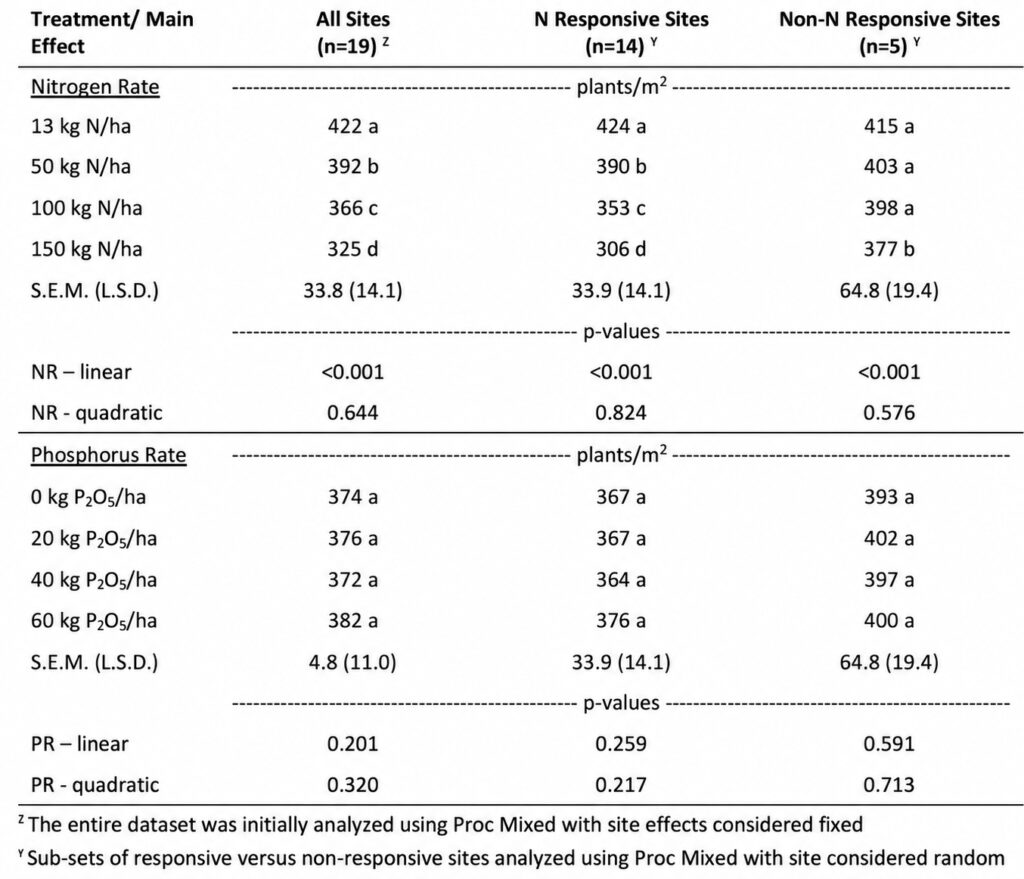
Project Objective:
- To evaluate the response of flax emergence and yield to various rates & combinations of side-banded N and P fertilizer.
Key Findings:
- Flax emergence was sensitive to side-band urea, particularly as rates increased above 100 kg N ha⁻¹. Side-band MAP did not affect emergence.
- Increasing N rate led to a slight delay in maturity, but the average delay of 2.4 days was generally not expected to be of agronomic concern.
- Flax yield increased with N and P fertilization. The agronomic optimum N and P rate was determined to be 100 and 20-40 kg N and P₂O₅ ha⁻¹, respectively.
Holzapfel et al., 2018
Flax yield response to N and P application
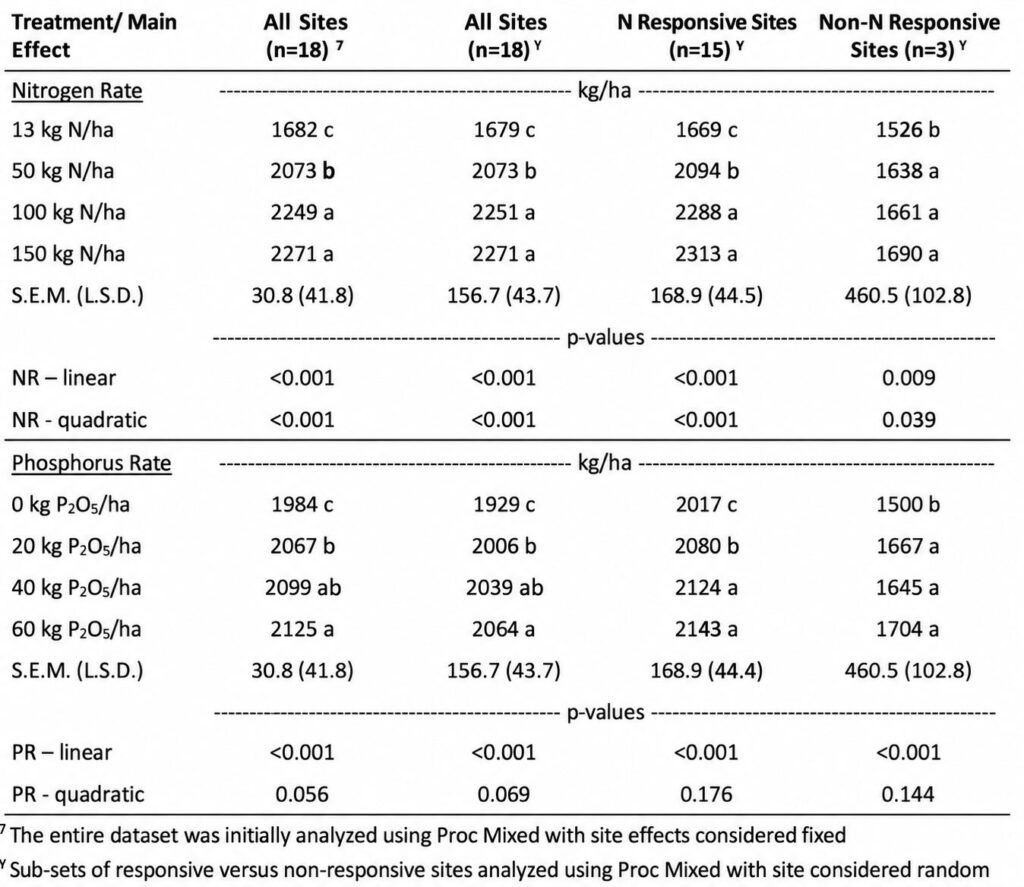
Project Objective:
- To evaluate the response of flax emergence and yield to various rates & combinations of side-banded N and P fertilizer.
Key Findings:
- Flax emergence was sensitive to side-band urea, particularly as rates increased above 100 kg N ha⁻¹. Side-band MAP did not affect emergence.
- Increasing N rate led to a slight delay in maturity, but the average delay of 2.4 days was generally not expected to be of agronomic concern.
- Flax yield increased with N and P fertilization. The agronomic optimum N and P rate was determined to be 100 and 20-40 kg N and P₂O₅ ha⁻¹, respectively.
Holzapfel et al., 2018
Flax response to S application: Saskatchewan-based Research is limited.
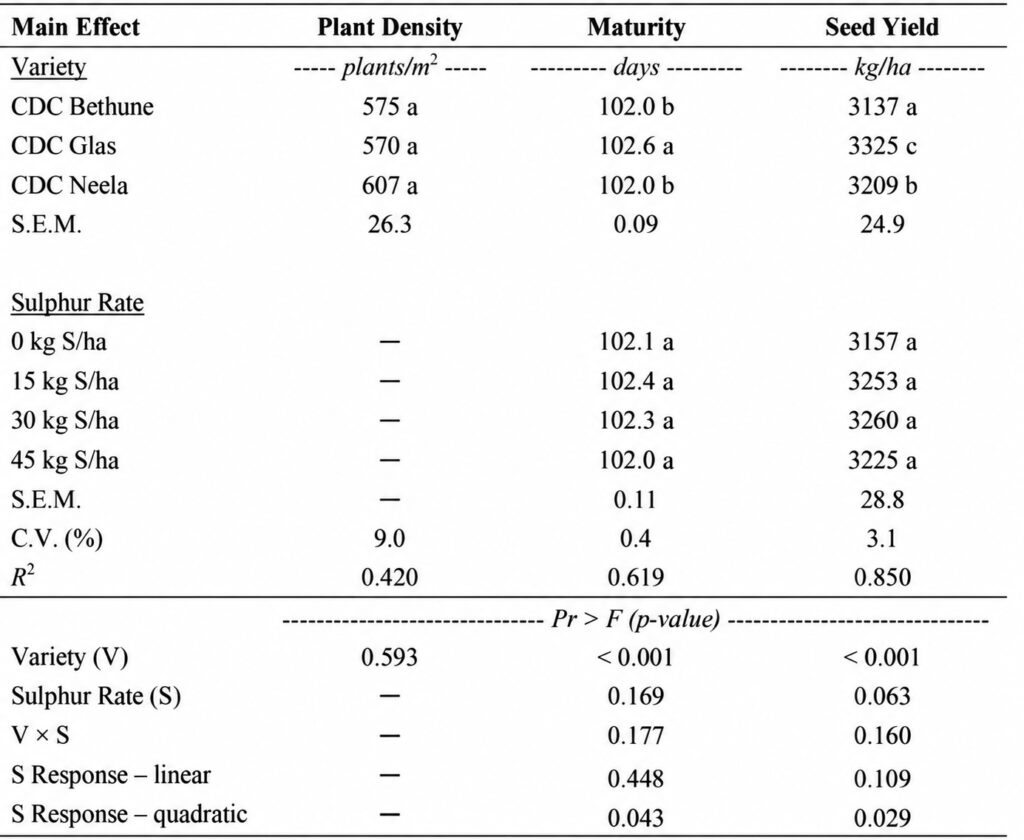
Project Objective:
- To demonstrate the response of 3 varieties to varying rates of S fertilizer.
Key Findings:
- Flax has a high yield potential under good agronomic and environmental conditions. The average yield across treatments was 58 bu/ac.
- Flax yield tended to increase with S fertilizer, up to 30 kg S ha⁻¹. The site had low residual extractable soil S, which likely supported the response.
- The only S source evaluated was ammonium sulfate (21-0-0-24). Future research exploring the yield response to elemental S forms, particularly those co-delivered with organic C sources, may be warranted.
Holzapfel, 2016
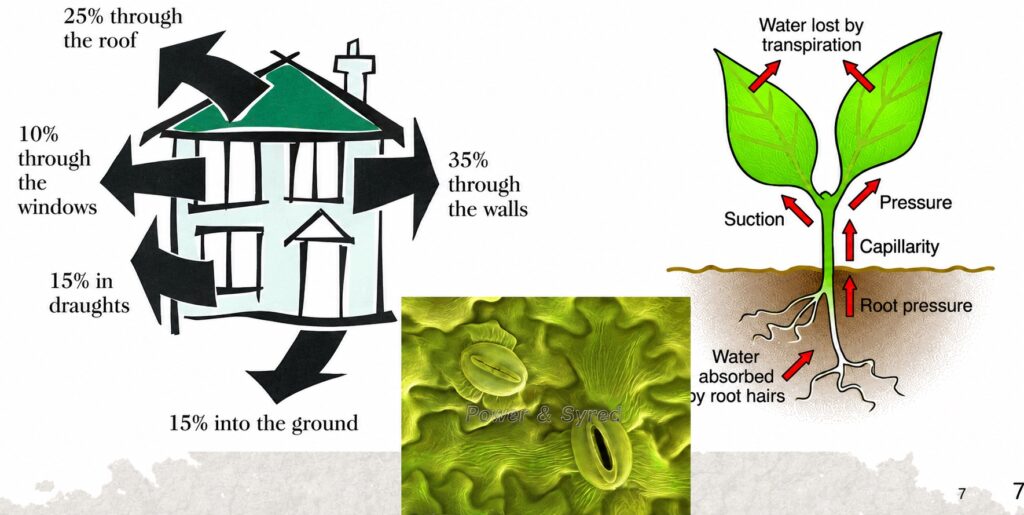
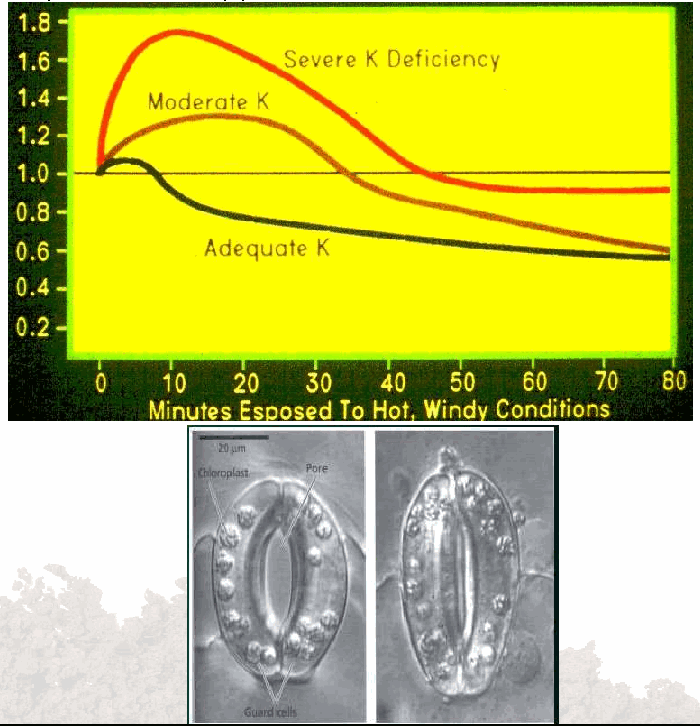
Role of K₂O on Evapotranspiration Rate and Impact on Yield Potential
Flax response to K application
- Research on flax response to potassium (K₂O) application is extremely limited.
- However, flax’s K₂O demand (1.8 lbs/bu) is similar to that of wheat (2.0 lbs/bu) and canola (2.3 lbs/bu).
- Potassium is involved in many plant physiological functions and contributes to stem strength and water use efficiency by regulating plant transpiration.
- Research exploring the role of K₂O in improving flax water use efficiency and preventing lodging across varying soil textures may be warranted.
Flax response to Zn in combination with P.
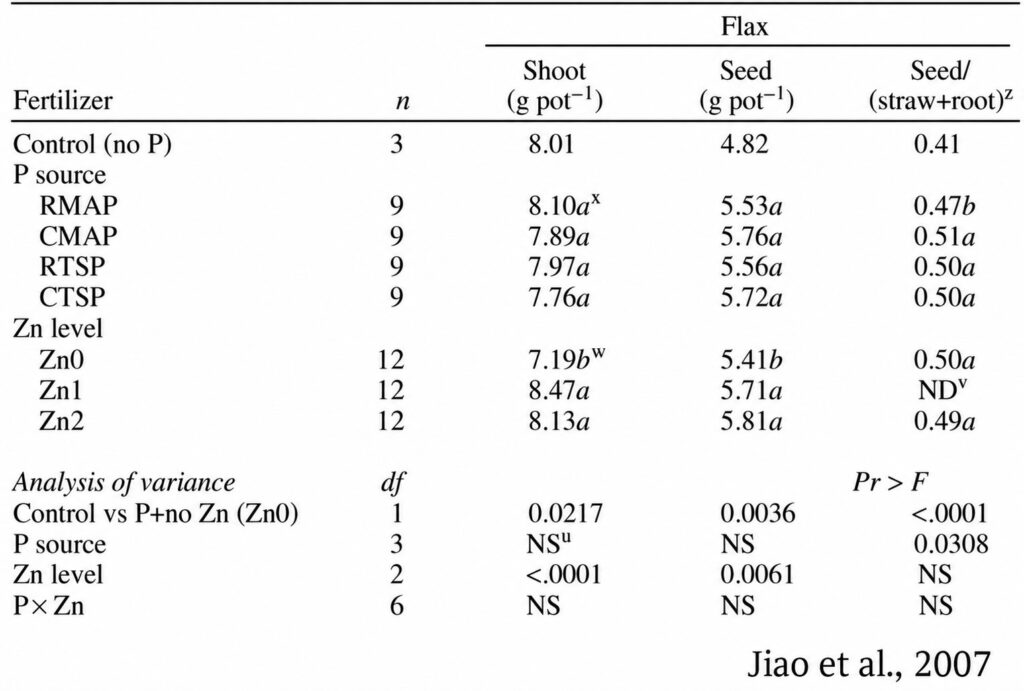
- Flax may be particularly susceptible to Zn deficiency.
- P application may induce crop Zn deficiency even when soil Zn concentrations are not below critical threshold levels.
- Co-application of P and Zn fertilizers may be required to meet crop nutrient requirements.
Project Objective:
- To evaluate the interactive effects of P and Zn (ZnSO₄) fertilizers on nutrient content (i.e. quality) of flax when grown in the growth chamber.
Key Findings:
- Zn addition improved flax growth and increased seed yield.
- However, results from field evaluations may differ from those obtained in the growth chamber.
- Plot and field-scale research exploring flax yield and quality from co-application of P and Zn fertilizers or different sources is warranted.
Jiao et al., 2007
Agronomic considerations
- Seeding Date: Early dates (May seeding) typically result in highest yields.
- Seeding Rate: Target plant stands range from 37-56 plants/ft². Typical seeding rates range from 35-42 lbs/ac.
- Seeding Depth: Target 1-1.5”. If chasing moisture, recommended to not seed below 2” depth.
- Safe rates of seed-placed fertilizer.
- 15 lbs/ac P₂O₅ according to Sask Ministry of Agriculture Guidelines.
- May vary by P source according to its solubility (e.g. struvite).
- Rotational impacts on AMF.
- As flax relies on AMF for improved nutrient uptake (particularly P), avoid planting flax on canola stubble, as canola does not form associations with AMF and AMF networks tend to die off when it’s grown.
- Lodging and Residue Management: Target early seeding, as later seeding can result in a taller crop height, increasing risk of lodging and making harvest straw management difficult.
Flax Fertility Case Study with Plant Root Simulator (PRS®) Technology
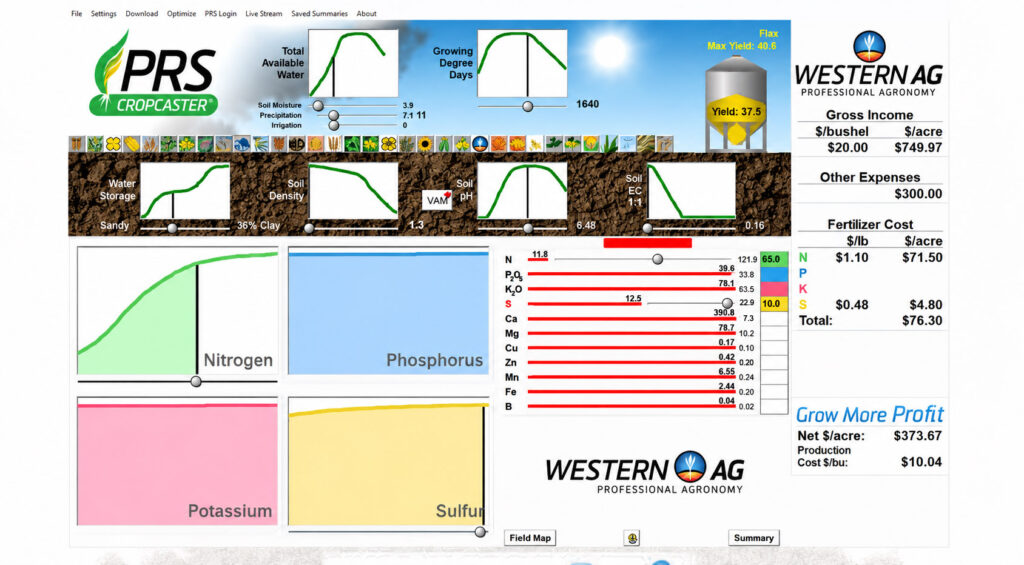
Blake Weiseth PhD, PAg
Flax Field Day
Kernen Crop Research Farm
July 28, 2026

